Why Relying on One Audience Is a Dangerous Trap
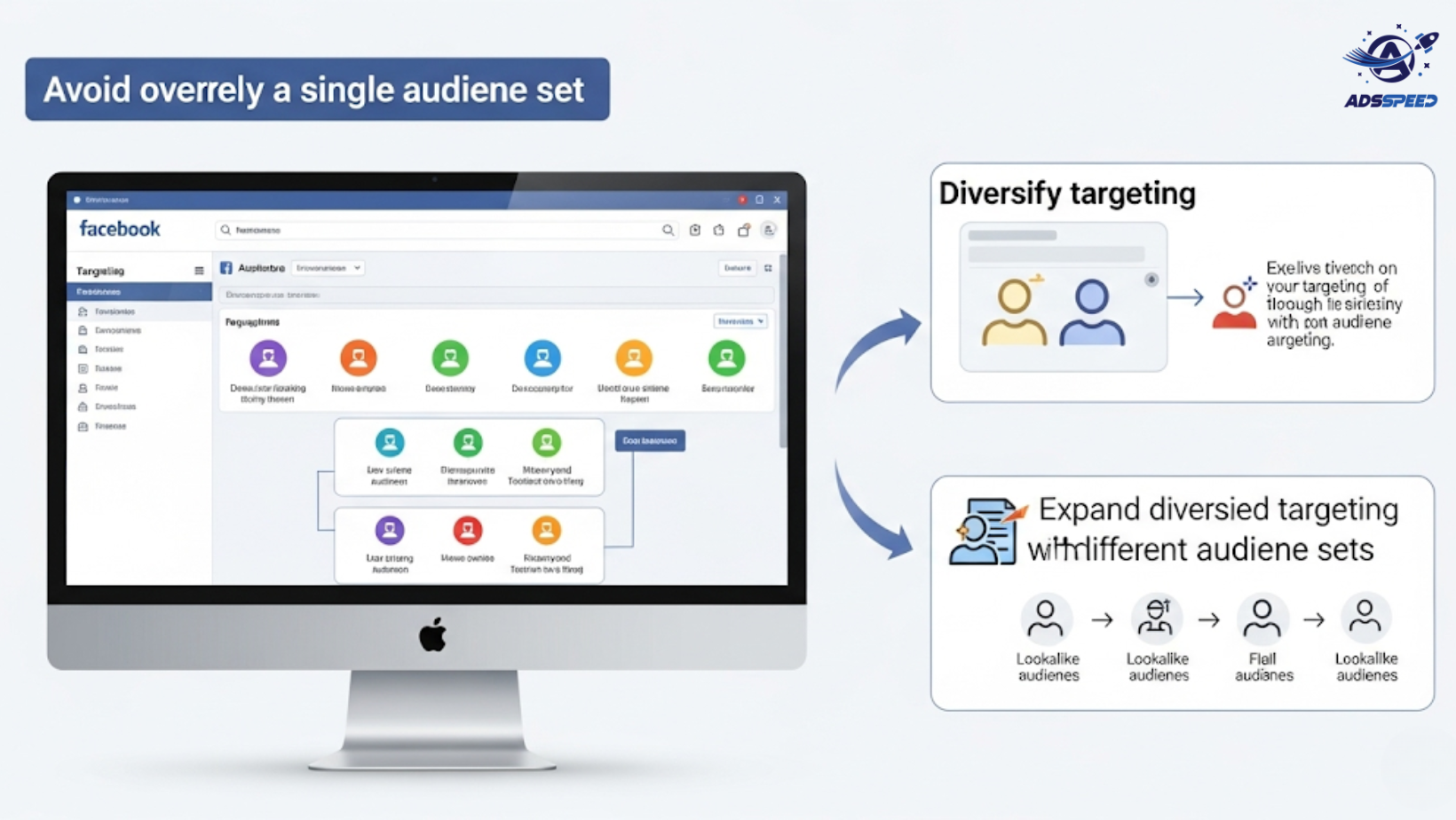
Many advertisers make the mistake of pouring all their budget into a single audience set—like a high-performing Lookalike or Custom Audience.
But here’s the problem:
- That audience may burn out over time
- You limit your scaling potential
- Your performance can suddenly drop due to algorithm changes or audience fatigue
- You may be paying more for the same clicks as competition increases
In short: too much dependence on one audience = fragile strategy.
Signs You’re Over-Relying on a Single Audience
- CTR and engagement rates start to decline
- Frequency goes up, but conversions stay flat
- You pause the campaign—and nothing else works
- You haven’t tested a new audience in weeks
Sound familiar? Let’s fix that.
1. Rotate Between Different Audience Types
Facebook offers several audience categories—use them all strategically:
| Audience Type | What It Includes | Use Case |
| Core | Interest, behavior, location, age, gender | Cold targeting |
| Custom | Website visitors, email lists, app users | Warm retargeting |
| Lookalike | Users similar to your top converters | Scalable cold reach |
Tip: Segment each audience set by funnel stage and keep campaigns organized using dashboards like Adsspeed.
2. Continuously Test New Audiences
Make audience testing part of your monthly routine.
Try:
- New interest combinations
- Lookalikes based on different events (e.g., top spenders, video viewers)
- Regional segmentation by country, city, or language
- Layering exclusions to prevent overlap
Example: Instead of only 1% Lookalike of Purchasers, try 2%, 3%, and interest-based cold audiences.
3. Use Broad Targeting (Yes, Broad!)
Facebook’s algorithm in 2025 is smarter than ever.
Sometimes, letting it auto-optimize within a broad audience (no interests, just age/location) outperforms narrow targeting—especially if you have strong creatives and pixel data.
Test broad targeting in parallel with your best-performing audiences.
4. Avoid Overlapping and Fatigue
Audience overlap can cause:
- Competing ad sets
- Higher CPMs
- Redundant impressions to the same users
Use Facebook’s Audience Overlap tool to check for conflicts
Adjust exclusions to separate cold, warm, and hot audiences
Monitor Frequency metric to avoid fatigue (ideally <3 per week)
5. Monitor Performance Metrics by Segment
Track these metrics per audience group:
- CTR (Click-Through Rate)
- CPA (Cost per Acquisition)
- ROAS (Return on Ad Spend)
- Frequency
When a set drops below your benchmark, scale it down and shift budget to testing.
Tools like ads check speed let you compare results quickly across audiences and make real-time adjustments.
6. Build a Resilient Ad Structure
Design your campaigns to withstand changes by:
- Running at least 3–5 audience sets per campaign
- Budgeting 70% to proven winners, 30% to new tests
- Avoiding dependence on custom data that may become outdated (e.g., old email lists)
If one audience tanks, others can keep your results steady.
Final Thoughts
Relying on a single audience set is like balancing your entire business on one leg—it might work for a while, but it’s risky long-term.
To avoid this:
Diversify your targeting strategy
Rotate and test regularly
Monitor performance by audience
Use smart tools like Adsspeed for multi-audience control and scaling
In a dynamic ad environment like Facebook, agility is your best advantage.
🔹 Google Chrome Store: Search “”Ads Check Speed | adsspeed.com””
https://chromewebstore.google.com/detail/ads-check-speed-adsspeedc/bhfahbbgppclfpeapkaebjbcffjnahcd
🔹 IOS Download : https://apps.apple.com/vn/app/adscheckspeed/id6742325139
🔹 Android Download : https://play.google.com/store/apps/details?id=com.dev.fbadsspeedv2&hl=vi