Why Ethics Matter in Facebook Advertising
In today’s data-driven world, Facebook Ads are powerful—but with that power comes responsibility.
Consumers are more aware of how their data is used, what they’re shown, and how brands communicate. If your ads feel misleading, manipulative, or intrusive, you’re not just risking poor performance—you’re risking your brand’s integrity.
This guide will walk you through the key ethical considerations every marketer should keep in mind when creating and managing Facebook Ad campaigns.
1. Respecting User Privacy
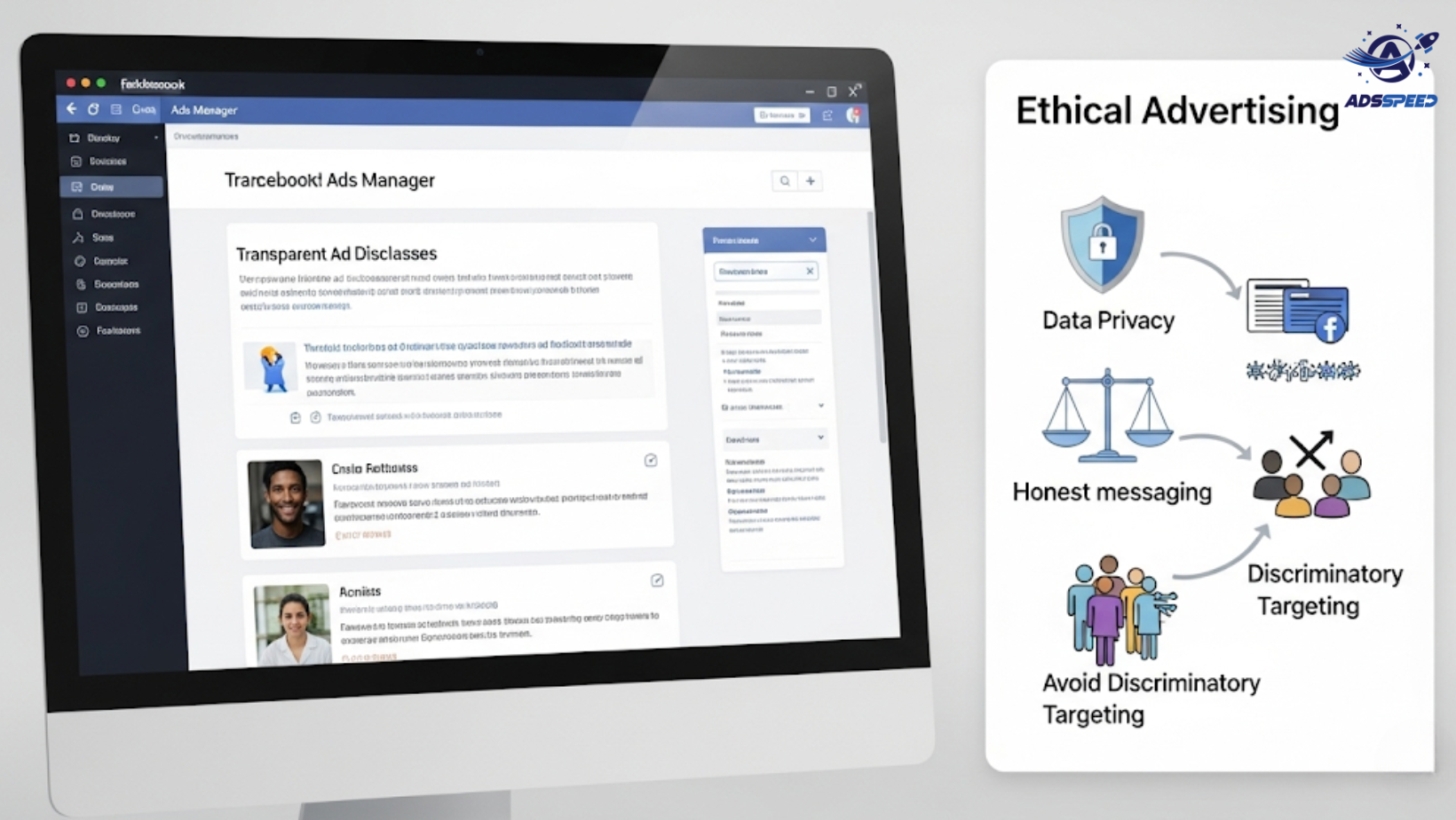
Facebook allows targeting based on demographics, interests, behaviors—even online activity. But just because you can doesn’t always mean you should.
Ethical practices:
- Avoid overly invasive targeting (e.g., ads that feel like you’re “spying”)
- Use Custom Audiences responsibly—don’t upload scraped or purchased data
- Let users know why they’re seeing your ad (e.g., “Because you liked X page”)
Stay aligned with privacy regulations like GDPR, CCPA, and Facebook’s own Data Use Policy.
2. Being Transparent in Messaging
Your ad should never feel like a bait-and-switch.
Ethical ad copy should:
- Clearly state the product/service being offered
- Avoid exaggerated or false claims
- Include terms and disclaimers (especially for pricing, availability, or promotions)
Tip: Include a visible link to your privacy policy and T&Cs if you’re collecting leads or offering trials.
3. Avoiding Manipulative Tactics
Some common “conversion hacks” can cross the ethical line.
Questionable tactics to avoid:
- Fake countdown timers to pressure clicks
- Fake testimonials or reviews
- Misleading before-and-after images
- Emotionally exploitative content (“Your kids may be in danger!”)
Instead, use persuasion with integrity. Focus on real benefits, social proof, and trust-building.
4. Ensuring Accessibility and Inclusivity
Everyone deserves a fair experience with your ads.
Make sure to:
- Use alt text for images where applicable
- Add subtitles for videos (most are watched without sound)
- Avoid discriminatory targeting (e.g., excluding based on race, gender, age)
Inclusivity isn’t just ethical—it expands your audience.
5. Responding Respectfully to Feedback
Your ad might spark comments, questions—or criticism.
Best practices:
- Respond with empathy, not defensiveness
- Remove only comments that are spam, hate speech, or harmful
- Don’t fake engagement by buying likes or using bots
Authentic conversation builds credibility.
6. Avoiding Ad Fatigue and Exploitation
Bombarding users with the same ad 10 times a day? That’s not just bad strategy—it’s unethical.
Use frequency caps and rotate creatives to avoid:
- User annoyance
- Perceived stalking
- Ad blindness
A respectful ad strategy is a sustainable one.
7. Promoting Positive, Socially Responsible Messages
Ads shape perceptions. Use yours to:
- Encourage positive behaviors
- Celebrate diversity
- Support ethical causes (if aligned with your brand)
Brands that act responsibly often earn higher loyalty and long-term growth.
Final Thoughts
Ethics in Facebook Ads isn’t about playing it safe—it’s about building real, lasting connections with your audience. Ethical advertising isn’t a limitation—it’s an advantage.
🔹 Google Chrome Store: Search “Ads Check Speed | adsspeed.com”
https://chromewebstore.google.com/detail/ads-check-speed-adsspeedc/bhfahbbgppclfpeapkaebjbcffjnahcd
🔹 IOS Download : https://apps.apple.com/vn/app/adscheckspeed/id6742325139
🔹 Android Download : https://play.google.com/store/apps/details?id=com.dev.fbadsspeedv2&hl=vi