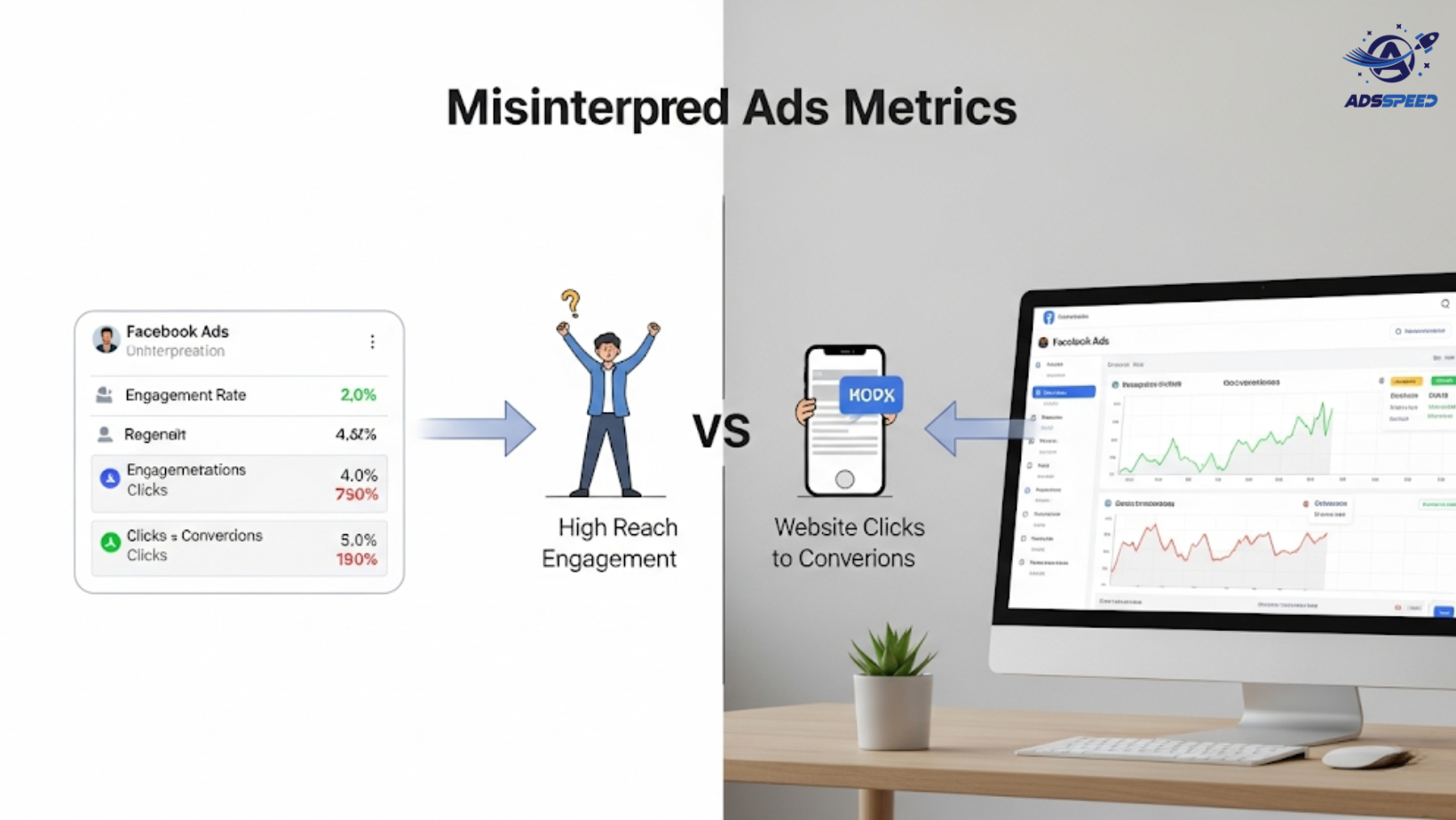
Why Interpreting Metrics Correctly Matters
Facebook Ads offer a wealth of performance data—but not all metrics tell the full story. Relying on the wrong ones (or misreading them) can lead to:
- Wasted ad spend
- Wrong optimization decisions
- False sense of success or failure
Let’s clarify which numbers often deceive—and how to use them the right way.
1. CTR (Click-Through Rate) Isn’t Always a Sign of Success
What you think: High CTR = Effective ad
Reality: High CTR may only mean your hook is strong, but not that people are converting.
What to do:
Pair CTR with Landing Page Views or Conversion Rate to see if clicks actually lead to results.
2. Impressions vs. Reach: Not Interchangeable
Impressions = How many times your ad was shown
Reach = How many unique people saw your ad
Misinterpretation: If your impressions are growing, it doesn’t mean your audience is.
What to watch: Frequency = Impressions / Reach
High frequency with low conversions = time to refresh your creatives.
3. ROAS (Return on Ad Spend) May Be Inflated
What you think: ROAS of 5 means your campaign is gold.
Reality: Facebook’s default attribution window may credit your ad for purchases it didn’t fully drive.
Use custom attribution settings or external tools (like adscheck or ads check facebook) to validate actual impact.
4. Cost Per Result: Know What “Result” Means
Don’t assume every result means a sale or signup.
Example:
- If your result is “Video View,” a low cost per result doesn’t mean high conversions.
- If your result is “Link Click,” ensure the landing experience matches expectations.
✔ Tip: Use adsspeed to test and track landing page performance after the click.
5. Engagement Metrics Can Mislead
High likes, shares, and comments look great—but:
- Are they from your target audience?
- Are they leading to conversions?
Vanity metrics = feel good, perform poor.
Always cross-check engagement with Conversion Rate or Leads Captured.
6. Video ThruPlays Don’t Mean Full Views
ThruPlays = Viewed at least 15 seconds, not necessarily the whole video.
If you’re measuring brand impact, prioritize:
- Video Completion Rate
- Average Watch Time
7. CPM Is Contextual
High CPM isn’t always bad. For example:
- Targeting a high-value niche audience?
- Running during competitive periods (e.g. holidays)?
Instead of focusing only on low CPM, track Cost per Quality Lead or Cost per Purchase.
Conclusion
Don’t let misleading metrics drive your Facebook Ads strategy. Look deeper into what each number really tells you—and always cross-reference data for accurate decisions.
Pro Tip: Combine Meta’s built-in analytics with third-party tools like adscheck or adsspeed to get a fuller, more accurate view.