Why You Should Target Non-English Speaking Audiences
While English-speaking markets are competitive and often saturated, non-English speaking regions offer huge growth potential, often with lower CPC and higher engagement.
However, running Facebook Ads for these markets requires more than just translation — it requires cultural and contextual localization.
Here’s how to optimize your Facebook Ads for global, non-English speaking audiences in 2025 and beyond.
1. Translate and Localize Your Ad Copy
Using tools like Google Translate won’t cut it. Instead, hire native speakers or use professional services to:
- Adapt tone and idioms to local culture
- Adjust CTA styles (“Get Offer” may become “Nhận Ưu Đãi Ngay” in Vietnamese)
- Replace references that don’t make sense locally (e.g., Thanksgiving promotions in countries that don’t celebrate it)
Tip: Localize the headline, CTA, caption, and even emojis based on cultural norms.
2. Use Dynamic Language Ads (DLA)
Facebook’s Dynamic Language Optimization allows you to show the same ad in multiple languages automatically — using the right version based on the user’s settings.
Benefits:
- One ad set, multiple languages
- Simplified campaign structure
- Better relevance scores per audience segment
Use DLA when targeting multiple languages within one country or region.
3. Optimize Visuals for Local Culture
Images that work in the U.S. may fall flat in Japan, Brazil, or Saudi Arabia. When choosing creatives:
- Show local people or locations
- Use region-specific color palettes (e.g., red and gold in China = luck)
- Avoid culturally insensitive imagery
Culturally aligned visuals boost CTR and trust, especially in newer markets.
4. Choose the Right Time Zones and Devices
Understand when your audience is most active:
- Run ads during local peak times, not your own
- Focus on mobile-first formats for countries where smartphones are primary internet access points
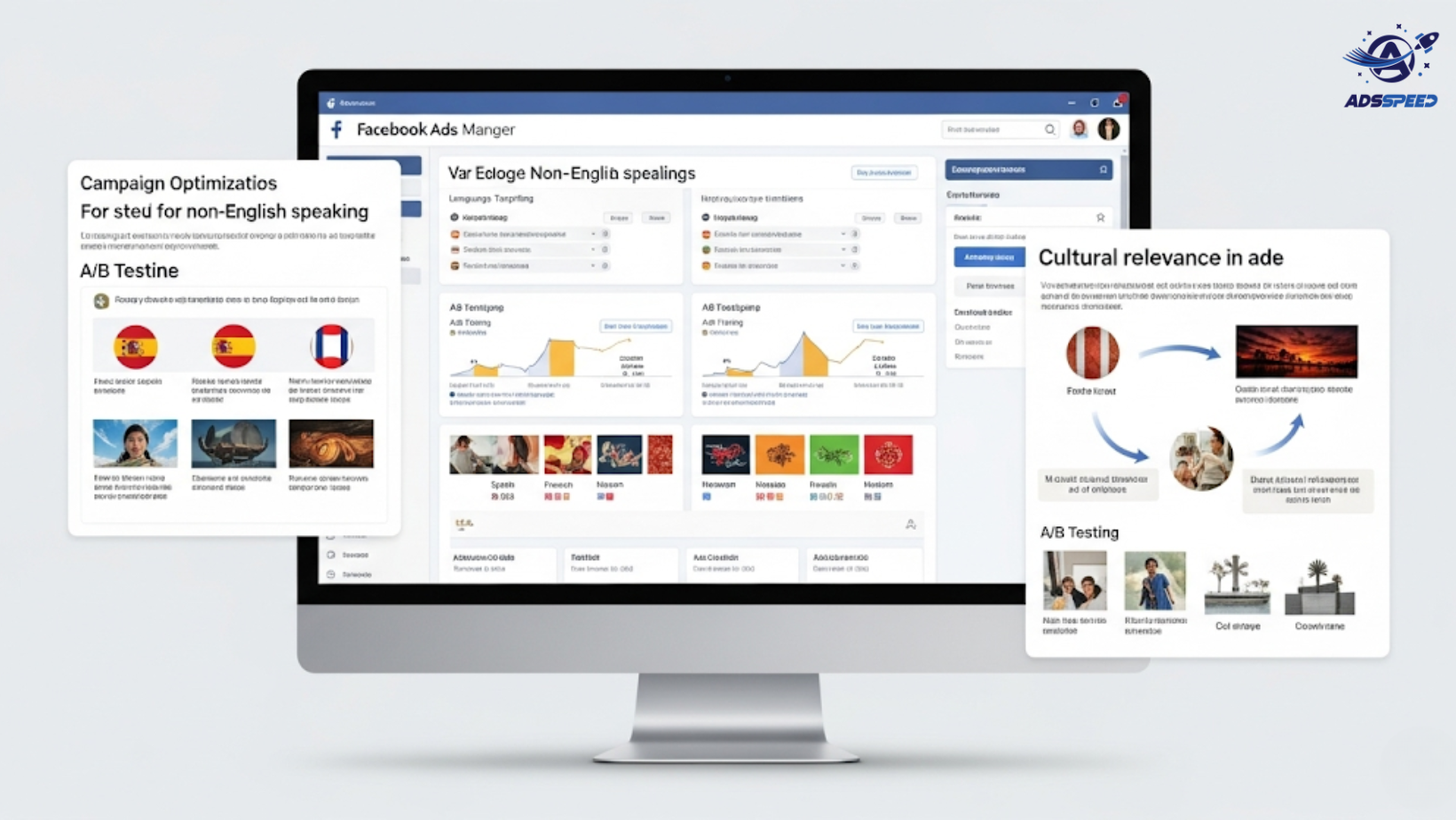
Tools like Adsspeed allow marketers to manage time zones, currencies, and ad performance across markets from a unified dashboard — ideal for multilingual campaigns.
🔹 Google Chrome Store: Search “Ads Check Speed | adsspeed.com”
https://chromewebstore.google.com/detail/ads-check-speed-adsspeedc/bhfahbbgppclfpeapkaebjbcffjnahcd
🔹 IOS Download : https://apps.apple.com/vn/app/adscheckspeed/id6742325139
🔹 Android Download : https://play.google.com/store/apps/details?id=com.dev.fbadsspeedv2&hl=vi
5. Tailor Offers by Region
What works in one market might not work in another. Customize:
- Price points (local currencies)
- Payment methods (COD, bank transfer, mobile wallet)
- Promotions (holidays, festivals, buying habits)
Example: Run back-to-school promos in August for the U.S., but in February for Vietnam.
6. Retarget in the Right Language
Once people engage, make sure retargeting ads match their original language experience. Nothing breaks trust faster than switching back to English mid-funnel.
Use:
- Custom audiences based on language-based landing pages
- Multilingual UTM tags and segmented retargeting ad sets
- Language-specific testimonial creatives
7. Track Performance by Language Segment
Split your ad reports to see which language groups are converting best. Key metrics to monitor:
- CTR by language
- Cost per result (CPR) by region
- Drop-off rates on multilingual landing pages
Use these insights to scale the highest-performing languages and tweak underperforming ones.