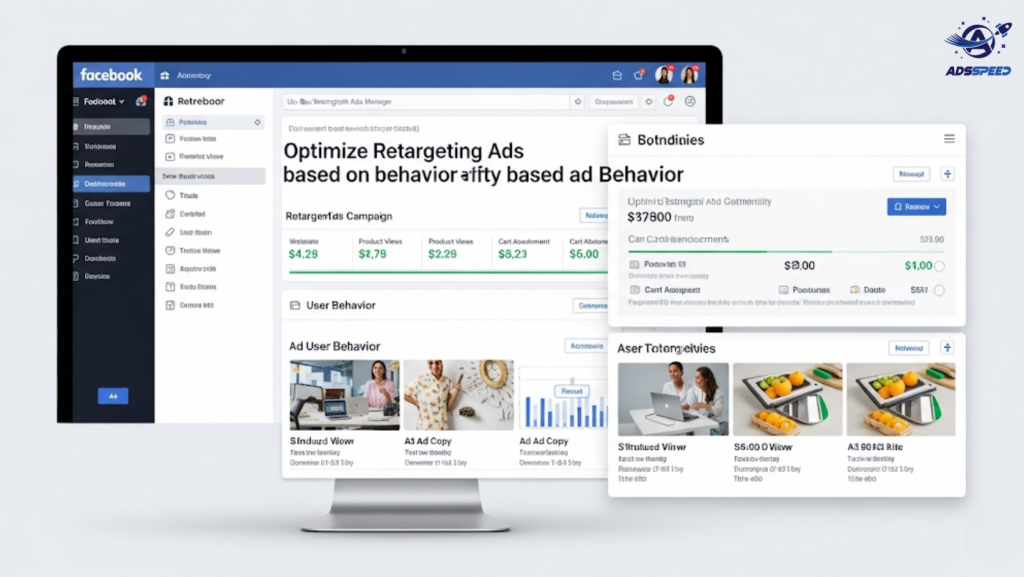
Why Behavior-Based Retargeting Matters
Traditional retargeting simply shows ads to people who visited your site.
But behavior-targeted retargeting?
It’s next-level — showing the right message to the right person based on what they actually did.
That means:
Better click-through rates
Lower ad spend waste
Higher conversions
Let’s break down how to build smarter, behavior-based retargeting campaigns.
Step 1: Segment Audiences by On-Site Behavior
Use Facebook Pixel or Conversions API to track what users do on your site. Then segment based on behavior like:
- Added to cart but didn’t purchase
- Viewed a product page
- Read a blog but didn’t opt in
- Spent more than X minutes on site
💡 Tools like adscheck or ads check facebook can help verify if your retargeting audiences are loading and syncing properly.
Step 2: Match Ad Creatives to Intent
Now that you’ve segmented your audience, create specific ad creatives tailored to their behavior:
| Behavior | Matching Ad Idea |
| Added to cart, didn’t buy | “Still thinking it over? Here’s 10% off.” |
| Viewed product, no action | “Take another look. Only 3 left in stock!” |
| Read a blog on a topic | “Get the full guide on [topic] — Free eBook inside!” |
| Spent time on pricing page | “See why 10,000+ users chose us over competitors.” |
Step 3: Use Time Windows Strategically
Behavior isn’t just what people do, but when.
Set up time-based retargeting windows:
- 0–3 days: Hot leads → Show urgency/offers
- 4–7 days: Warm leads → Build trust/testimonials
- 8–14 days: Cold leads → Educate, soft call-to-actions
Facebook lets you build Custom Audiences based on specific time ranges — use that to your advantage.
Step 4: Layer Additional Targeting
For better precision, layer behaviors with:
- Device type (mobile vs. desktop)
- Geography (especially for local businesses)
- Ad interaction (clicked a past ad but didn’t convert)
Pair this with real-time data via tools like adsspeed to avoid wasting impressions on low-intent users.
Step 5: Optimize & Test Variations
Test ads based on:
- Ad copy tone (curious vs. urgency-driven)
- Offer type (discount vs. freebie vs. social proof)
- Format (carousel vs. video vs. static)
Use ads check speed to monitor load times — a slow landing page kills high-intent retargeting clicks.
Final Thoughts
Behavior-targeted retargeting isn’t just about bringing users back — it’s about bringing them the right message at the right moment.
It’s smarter. More efficient. More human.
Start small: segment just two behaviors and build from there.
Use tools like adscheck and adsspeed to test, monitor, and scale.
When done well, this method transforms retargeting from annoying to addictive.