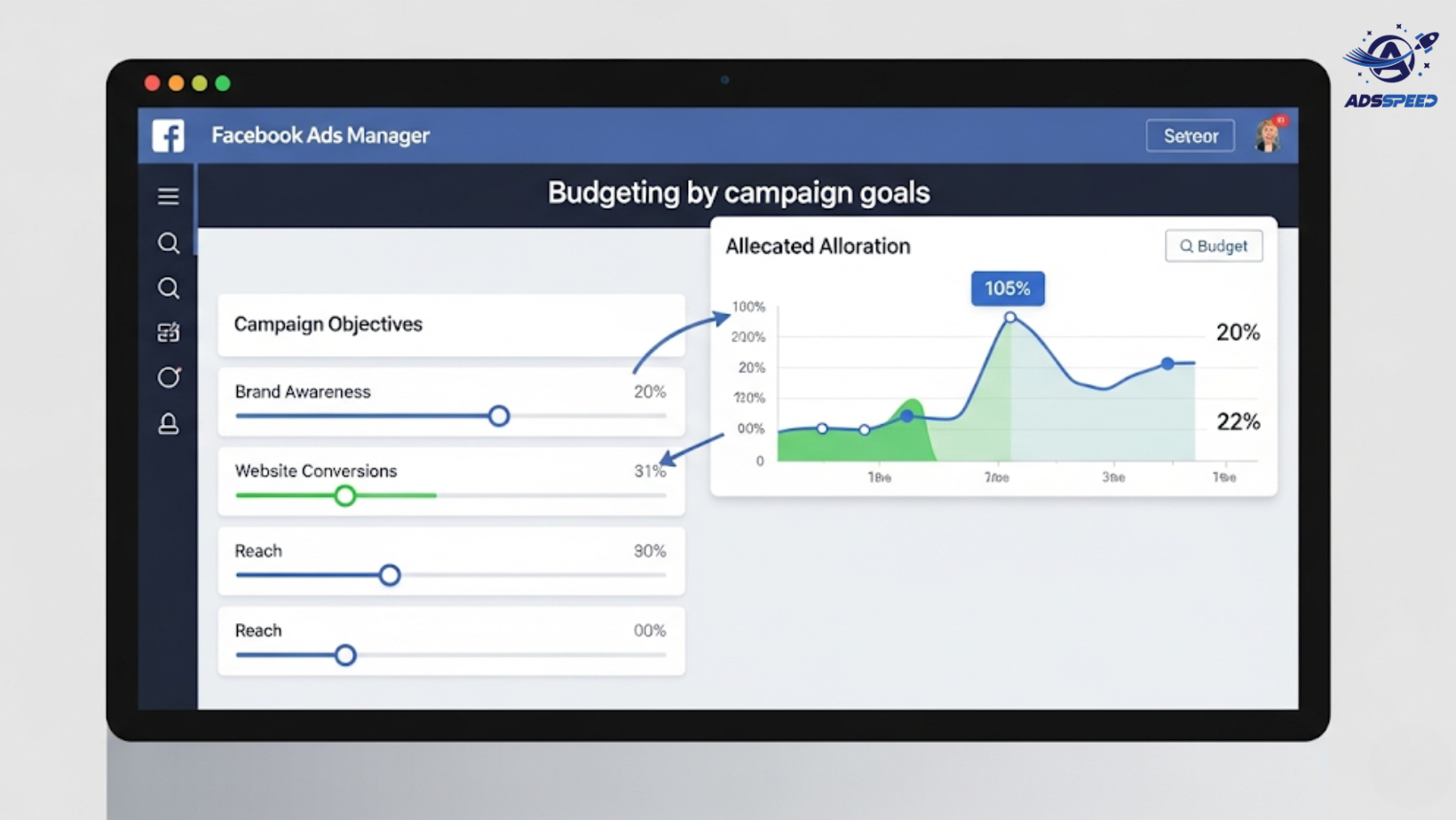
Why Budgeting by Campaign Goals Matters
Not all Facebook Ads are created equal — and neither should your budget be.
Running a campaign without aligning your budget to your objective is like throwing darts in the dark. To get the best return, you need to fund each goal with intention.
Whether you’re aiming for reach, clicks, leads, or sales, your budgeting strategy needs to change.
Step 1: Identify Your Campaign Objective
Here are common Facebook Ads goals and how they typically affect your budget:
| Goal | Budget Style | Why It Matters |
| Brand Awareness | Low–Medium | CPM is lower, but harder to measure ROI |
| Traffic | Medium | Pay-per-click, need more daily spend |
| Engagement | Medium–High | Great for retargeting, needs momentum |
| Lead Generation | Medium–High | Form fill ads or Messenger lead gen |
| Conversions/Sales | High | Needs strong tracking + remarketing |
Step 2: Allocate Budget Based on Funnel Stage
Think of your budget as a funnel:
- Top of Funnel (TOF) – Awareness / Traffic
Budget: 20–30%
Why: Cast a wide net and introduce your brand - Middle of Funnel (MOF) – Engagement / Lead Generation
Budget: 30–40%
Why: Nurture interest, build trust - Bottom of Funnel (BOF) – Retargeting / Conversions
Budget: 30–50%
Why: This is where purchases happen
Use adsspeed to test the speed and effectiveness of each funnel-stage ad. Don’t waste budget on ads that lag or load slowly.
Step 3: Use Metrics to Adjust Spend
For each campaign, watch your Cost per Result closely:
- High CPC or CPM in an awareness campaign? Reduce budget.
- High CTR in lead gen? Consider increasing budget.
- Low ROAS in conversion ads? Pause and optimize.
You can run regular audits using ads check facebook to make sure your campaigns are budget-healthy and optimized.
Step 4: Test with a Minimum Viable Budget (MVB)
Don’t go all-in right away. Try:
- $5–10/day for traffic or engagement
- $20/day minimum for lead generation or conversions
Track for 3–7 days. If results are promising, scale gradually.
Tools like adscheck help validate your creative before you increase spend — ensuring you’re not scaling a weak ad.
Step 5: Match Budget to Campaign Duration
Short campaign? Focus spend upfront.
Longer campaign? Spread out your budget to maintain performance and avoid ad fatigue.
Tip: Set a lifetime budget for seasonal or promotional campaigns and a daily budget for ongoing testing.
Bonus: Don’t Forget Hidden Costs
Add ~10–20% buffer for:
- Creative production
- Tracking tools
- A/B testing
- Landing page optimization
All these impact your real ROI, so build them into your budget.
Final Thoughts
Facebook Ads aren’t just about spending — they’re about spending right.
Budgeting based on campaign goals ensures:
Smart use of your money
Better performance tracking
More scalable results
And with support from tools like adsspeed, adscheck, and ads check facebook, you can budget, test, and optimize with total confidence.