Why CTR Drops Over Time (and Why You Should Care)
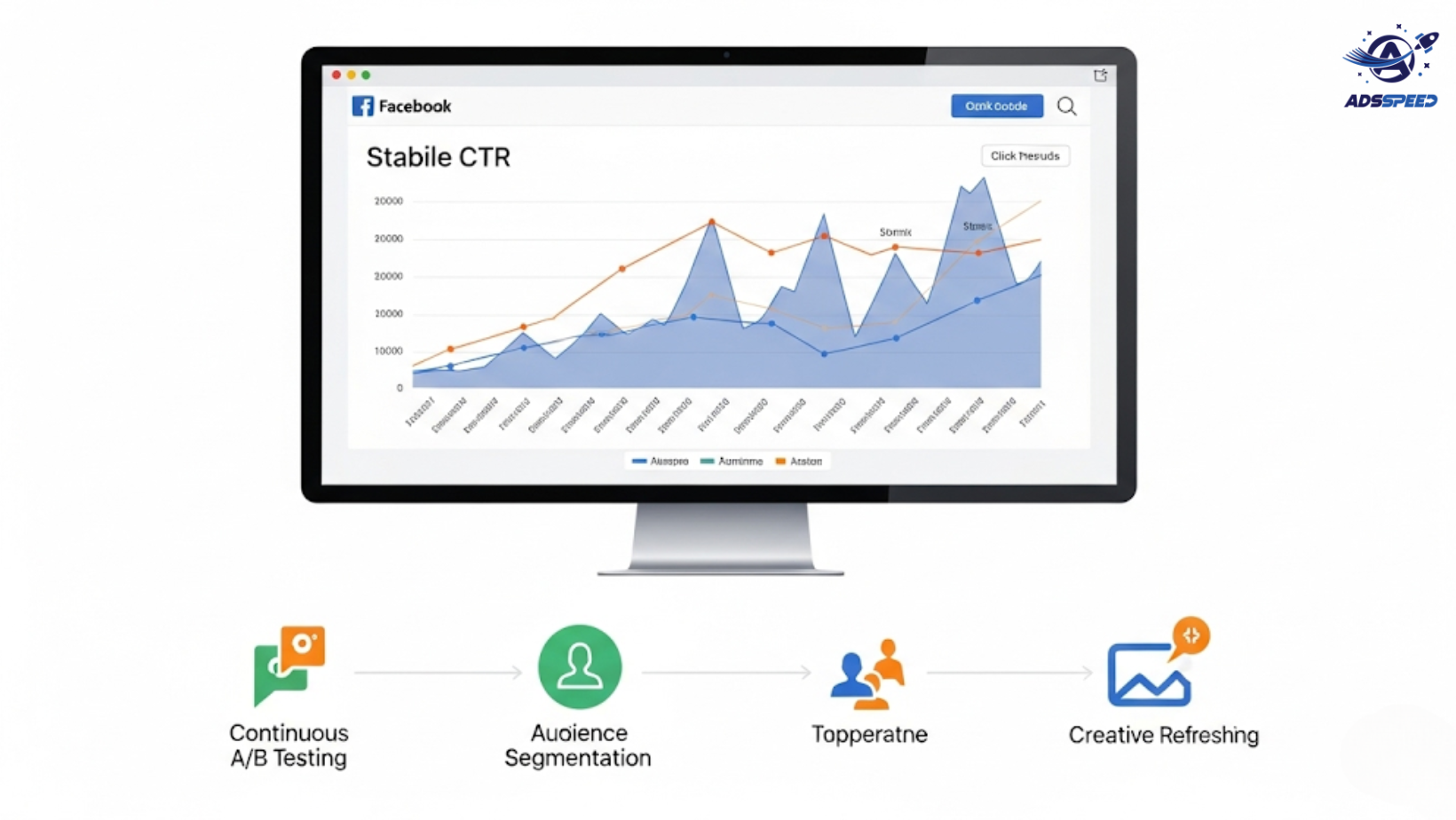
Click-Through Rate (CTR) is one of the most critical performance metrics in Facebook Ads. A high CTR means your ad is relevant, engaging, and targeted well. But even top-performing ads can see a decline in CTR over time due to:
- Ad fatigue – Your audience has seen it too many times
- Relevance decay – Message no longer matches audience interest
- Market saturation – Competitors running similar offers or visuals
A dropping CTR signals a weakening ad, which can increase costs and lower conversions. Maintaining a steady CTR requires consistent optimization and a proactive approach.
1. Refresh Creatives Regularly
Don’t wait until your CTR drops to swap out visuals or copy. Rotate ad creatives every 10–14 days, especially for warm or retargeting audiences.
Try variations like:
- Color changes in graphics
- New image or video formats (carousel, reels, short-form)
- Different headline angles
- User-generated content (UGC) or testimonials
Pro Tip: Use tools like ads check speed to track creative fatigue early.
🔹 Google Chrome Store: Search “Ads Check Speed | adsspeed.com”
https://chromewebstore.google.com/detail/ads-check-speed-adsspeedc/bhfahbbgppclfpeapkaebjbcffjnahcd
🔹 IOS Download : https://apps.apple.com/vn/app/adscheckspeed/id6742325139
🔹 Android Download : https://play.google.com/store/apps/details?id=com.dev.fbadsspeedv2&hl=vi
2. Segment and Expand Your Audiences
A narrow audience might yield a high CTR initially—but it won’t last.
Use Lookalike Audiences to scale reach without losing relevance
Test interest stacking (multiple interests in one ad set)
Use exclusions to avoid ad overlap between campaigns
Separate warm and cold audiences for clearer messaging
3. Improve Ad Relevance
Facebook’s algorithm rewards ads that feel highly personalized. To do that:
- Match your offer with current market trends or seasons
- Use language your audience uses (industry terms, slang, etc.)
- Adapt messaging by location, age, or job roles
- Use Dynamic Creative for Facebook to test multiple combinations
Even slight tweaks in tone or phrasing can lift CTR back up.
4. Optimize for Placement
Each placement (Feed, Stories, Reels, Audience Network) behaves differently. Ads that perform well in one might underperform in another.
✔ Customize creatives by placement size and format
✔ Monitor CTR by placement in Ads Manager
✔ Exclude underperforming placements from your campaign
Reminder: Stories and Reels often have higher engagement—but only if the creative fits the format.
5. Monitor Frequency & Limit Ad Fatigue
High ad frequency (3.5+ per person) usually leads to lower CTR.
How to control this:
- Cap frequency using reach or impressions objectives
- Refresh copy and visuals once you reach a frequency of 2.5
- Use custom rules in Ads Manager to pause ads when CTR drops below a threshold
6. A/B Test Headlines & Hooks
Sometimes, your product doesn’t need a new offer—just a better hook.
Try headline formats like:
- Questions (“Still using outdated tools for your business?”)
- Data-backed (“97% of marketers missed this one tactic…”)
- Benefit-driven (“Boost your sales in 7 days, no extra ad spend.”)
Run 3–5 variations to identify what maintains CTR best over time.
7. Retarget With New Angles
Retargeting audiences can grow tired of repetitive messages.
Refresh your retargeting approach by:
- Using testimonials or case studies
- Offering a free resource or demo
- Highlighting customer milestones (e.g., “Join 10,000+ users who switched to Adsspeed.”)
Conclusion
Keeping your Facebook Ads CTR steady over time isn’t about luck—it’s about systemized improvement.
By regularly testing creatives, expanding audiences, managing fatigue, and speaking directly to customer needs, you’ll ensure your CTR doesn’t just stay healthy—it improves.