What Is Facebook Ad Engagement Rate?
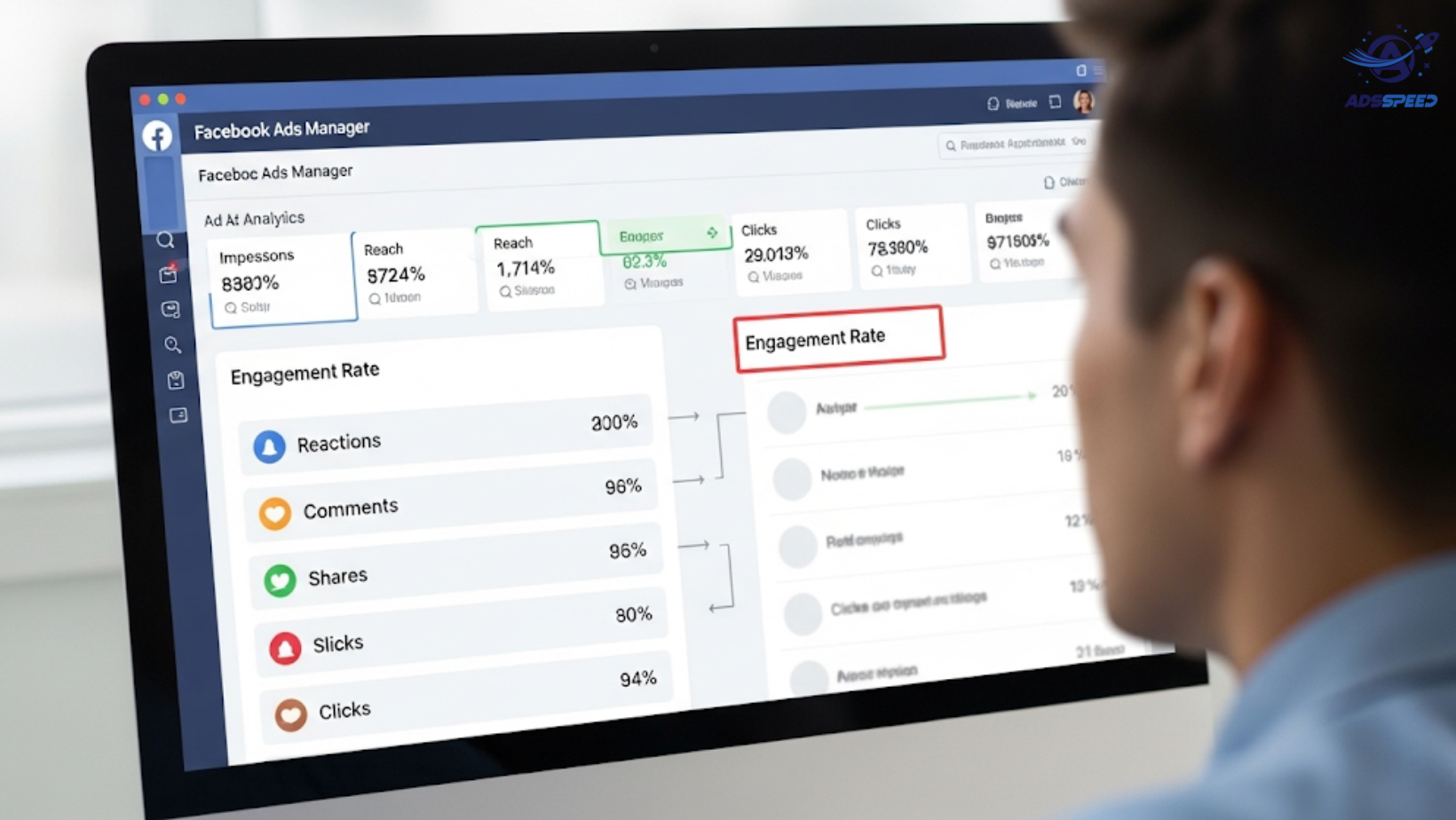
Facebook Ad Engagement Rate measures how users interact with your ad. It includes actions like:
- Likes 👍
- Comments 💬
- Shares ↗️
- Clicks (link or otherwise)
- Reactions and saves
The engagement rate is typically calculated as:
Engagement Rate (%) = (Total Engagements / Total Impressions) × 100
It tells you how compelling and relevant your ad is to the audience it’s being shown to.
Why Engagement Rate Matters
Engagement Rate affects more than just vanity metrics — it impacts:
- Relevance Score (now called Quality Ranking)
- Cost per Result
- Ad delivery & placement performance
Facebook’s algorithm favors ads with higher engagement, as they signal better user experience.
What’s a “Good” Engagement Rate on Facebook Ads?
There’s no universal benchmark, but here’s a general guide for 2025:
| Ad Type | Good Engagement Rate |
| Static Image | 1% – 3% |
| Video | 2% – 6% |
| Carousel | 1.5% – 4% |
| Reels Ads | 4% – 8% |
Note: The more targeted your audience, the higher engagement you should aim for.
How to Analyze Your Engagement Rate in Context
- Compare It to Campaign Goals
Are you optimizing for awareness, clicks, or conversions?- A high engagement rate in a conversion campaign with low purchases may indicate misalignment.
- In brand awareness campaigns, engagement is a key signal.
- Look at Post-Click Behavior
Combine engagement with:- Click-Through Rate (CTR)
- Time on Page
- Bounce Rate
- This tells you if engagement led to deeper interest.
- Check Ad Frequency
Engagement may drop when frequency increases, signaling ad fatigue. - Break Down by Audience Segments
Use Facebook Ads Manager to analyze engagement by:- Age
- Gender
- Placement (e.g., Instagram Feed vs. Facebook Stories)
- Device type
Common Mistakes When Reading Engagement Rate
Mistake 1: Treating All Engagement Equally
Not all actions mean the same. A comment or share shows deeper interest than a simple like.
Mistake 2: Ignoring Negative Engagement
Hidden posts, reports, or angry reactions don’t count toward positive engagement—but affect ad quality.
Mistake 3: Focusing Only on Engagement
An ad with 7% engagement but no conversions isn’t necessarily successful. Engagement is a signal, not the goal.
How to Improve Your Facebook Ad Engagement Rate
Use Eye-Catching Creatives: Test bold visuals, short videos, and native-style content.
Include Questions in Copy: Prompts like “Which one would you choose?” encourage interaction.
Use Storytelling: Narratives create emotional connection and are more likely to be shared.
Leverage UGC: Authentic content drives trust and clicks.
Retarget Engaged Users: Tools like Adsspeed help you track interactions and optimize future ad sets.
Final Thoughts
Reading Facebook Ad Engagement Rate correctly means going beyond the number. You need to understand its role in your objective, how it behaves across different audiences and placements, and how it connects with deeper metrics like conversions or retention.
🔹 Google Chrome Store: Search “Ads Check Speed | adsspeed.com”
https://chromewebstore.google.com/detail/ads-check-speed-adsspeedc/bhfahbbgppclfpeapkaebjbcffjnahcd
🔹 IOS Download : https://apps.apple.com/vn/app/adscheckspeed/id6742325139
🔹 Android Download : https://play.google.com/store/apps/details?id=com.dev.fbadsspeedv2&hl=vi