Introduction
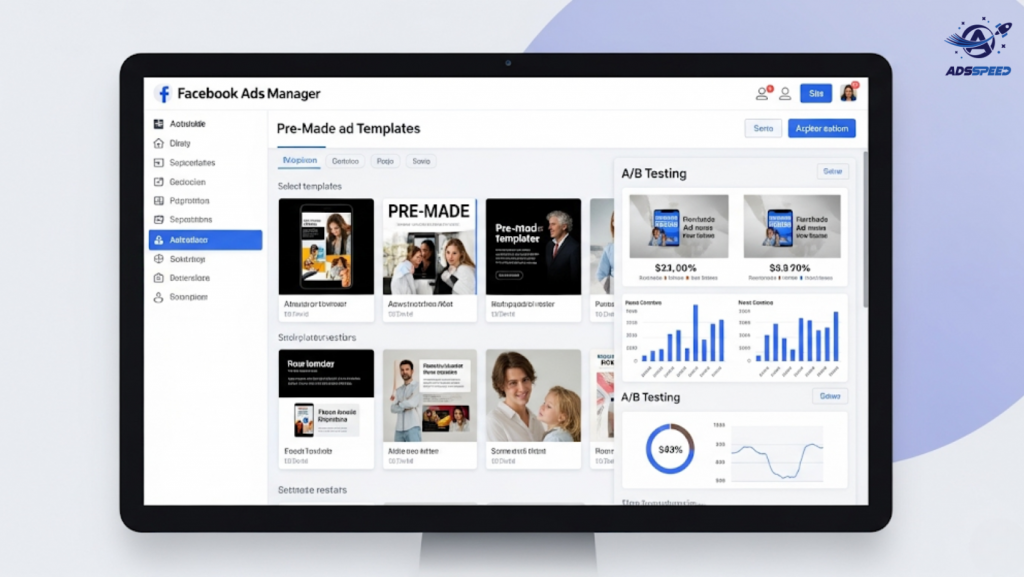
A/B testing is one of the most powerful tools in Facebook advertising—but it can be time-consuming and resource-heavy. Designing new creatives, rewriting copy, and adjusting formats for every test drains time and slows down optimization.
That’s where pre-made templates come in.
Using well-structured ad templates helps marketers:
- Launch tests faster
- Maintain creative consistency
- Focus on data, not design
- Scale results across campaigns
1. Why Use Pre-made Templates for A/B Testing?
Templates reduce friction in your workflow. Instead of reinventing the wheel for each test, you can:
- Plug in headlines, offers, or images
- Quickly adjust color schemes or CTAs
- Keep design formatting consistent
This allows you to test specific variables—like copy or visuals—without changing the entire layout.
2. What Should a Good Template Include?
Effective Facebook Ad templates are built for flexibility. Look for formats that include:
- A clear headline section
- Image/video placeholder with recommended dimensions
- CTA placement
- Optional elements like reviews, badges, price tags
Bonus: Add multiple variants of each element (e.g., 3 headlines, 2 CTAs) so you can rotate combinations quickly.
3. Where to Get Quality Ad Templates
You can:
- Use in-house design systems built in tools like Canva or Figma
- Purchase conversion-tested templates from marketplaces
- Explore drag-and-drop layouts provided by platforms like Adsspeed, which support ad management and A/B testing at scale
Many ad managers also use Google Slides or Notion databases to store, sort, and clone their best-performing templates.
4. Best Practices for Template-Based Testing
When testing with templates, follow these tips:
- Test one variable at a time (e.g., CTA text, not CTA + headline)
- Keep brand guidelines consistent to avoid misleading data
- Name your template files clearly (e.g., “Value-focused copy template – v2”)
- Run each test for a minimum of 3–5 days before judging results
Use Meta’s Experiments Tool or third-party dashboards (like ads check speed) to analyze which variation wins and why.
5. Templates to Try for Fast A/B Testing
Here are a few ready-to-test template types:
| Template Type | Ideal for |
| Testimonial Carousel | Building trust via reviews |
| Price Comparison Image | Highlighting deals and affordability |
| Short-Form Video Template | UGC-style video for attention-grabbing ads |
| Lead Gen Form Template | Capturing emails or sign-ups quickly |
| Product Bundle Layout | Promoting offers with multiple SKUs |
6. Benefits of Template-Based Testing at Scale
When you manage multiple ad sets or regions, templates:
- Allow you to scale localized variations fast
- Maintain design consistency across campaigns
- Reduce creative bottlenecks
- Help junior marketers run tests with minimal design input
This is especially helpful for agencies or teams using platforms like Adsspeed, which offer bulk management and multi-account ad deployment.
🔹 Google Chrome Store: Search “Ads Check Speed | adsspeed.com”
https://chromewebstore.google.com/detail/ads-check-speed-adsspeedc/bhfahbbgppclfpeapkaebjbcffjnahcd
🔹 IOS Download : https://apps.apple.com/vn/app/adscheckspeed/id6742325139
🔹 Android Download : https://play.google.com/store/apps/details?id=com.dev.fbadsspeedv2&hl=vi
Final Thoughts
Pre-made templates aren’t shortcuts—they’re efficiency tools that help you test smarter, scale faster, and stay consistent.
By using structured templates, you can cut production time, isolate performance variables, and ultimately improve ROI on your Facebook Ads faster than ever.